AI for Deep (and Accurate) Analysis
Gen AI gives answers based on probability, and it's tuned to give pleasing results. Without proper guardrails, those results can be anything from pandering to hallucinatory.
THOUGHTS
36 posts
Gen AI gives answers based on probability, and it's tuned to give pleasing results. Without proper guardrails, those results can be anything from pandering to hallucinatory.
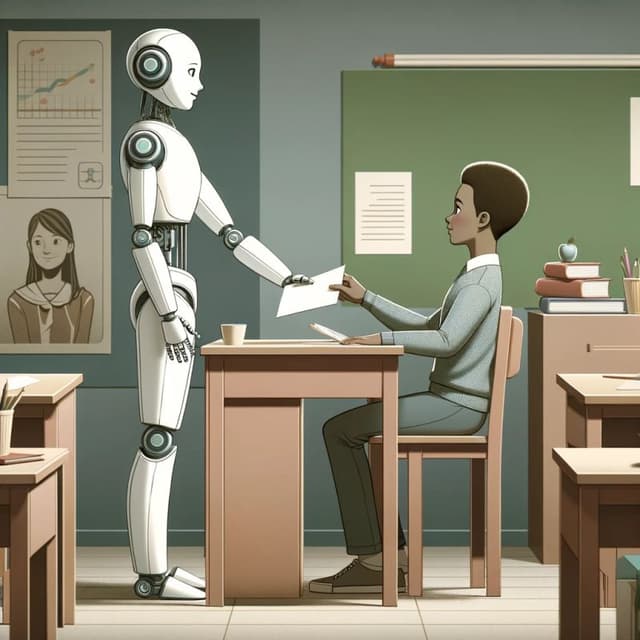
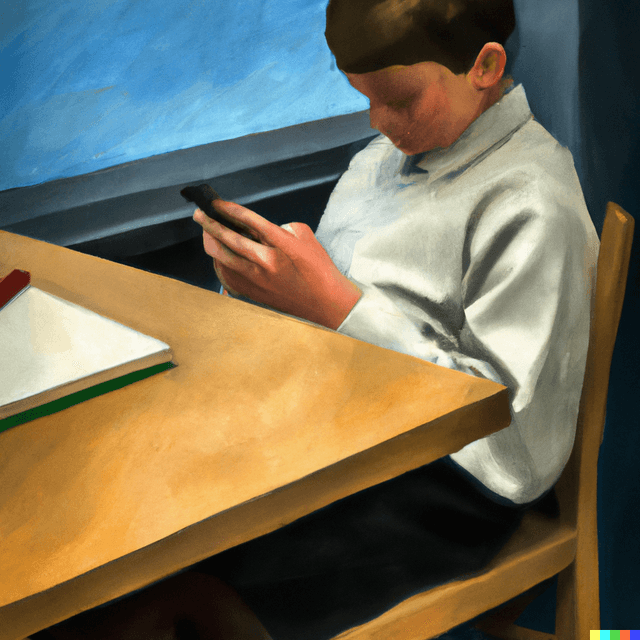
NYC public schools put a one-year moratorium on student-facing generative AI through 8th grade. Kids with their own devices will use it anyway; kids on school-issued devices won’t. And a major purpose of school is to prepare kids for life beyond school.
Volunteers at the theater company I helped start have been using GenAI to design flyers. The layouts come back clean: aligned columns, consistent margins. They also come back with colors that miss our style guide, pages that don't fit standard paper, and my last name spelled wrong. That one got me. GenAI is great for a quick prototype, and a human still has to finish it.
AI feedback that feels warm and affirming can also make it more likely to agree when you're wrong. Two studies show how sycophancy can distort both AI accuracy and human judgment. The fix isn't a rude AI. It's asking for evidence, candor, and challenge instead of validation.
A small business wanted to name its new AI receptionist after a real employee, and pass it off as human. That's the mistake. People sense pretty quickly when a voice isn't quite right, and the moment they realize they've been fooled, they feel tricked and lose trust. The fix isn't a better voice, it's transparency. So this week, if you're letting AI answer your phone, make it honest about what it is.
Those built-in AI assistants popping up in your email, your notetaker, your CRM are genuinely helpful, and they're free, which is exactly why I'd pause. When something digital is free, you're usually paying for it with something other than money, and here that something is your data. So this week, figure out whether your AI is training on what you feed it, and set your limits.
"ChatGPT, write a response to this message." Quick, easy, done. And that's exactly how outsourcing the work quietly becomes outsourcing the thinking. There's a name for it, cognitive offloading, and the research is unsettling: the heaviest AI users score the lowest on critical thinking. But I don't think the fix is less AI. It's remembering that AI can generate, but a human should elevate.
You get a video call and it's your business partner — her face, her voice, the way she laughs at the end of a sentence — asking you to move money today. In early 2024, that exact scenario cost one firm $25.6 million, and the raw material to fake you or your partner is already out there. Here's the both/and: the deepfakes are astonishing, and the two defenses that beat them are almost stupidly simple, and very human.
Over lunch yesterday, a friend asked me whether AI is actually making people less productive. I've felt both sides of it: the artificial-productivity treadmill of prompting and waiting, and the real lift of research done in minutes. Here's the honest question to ask before you reach for AI. Is it going to elevate what I can do, or just sideline my brain?
A recent notification on my phone’s lock screen: “Dinner music praised; expressions of love and admiration shared; pride conveyed.” Thanks, Siri, really nailed that sentiment. We live in a world of constant dehumanizing AI influence. But it still needs saying: AI is only as good as the human using it. …
AI agents are huge timesavers. But also: BE REALLY CAREFUL about how much agency you give them. Witness Summer Yue, Safety and Alignment Chief at Meta’s Superintelligence Lab, whose own AI agent tried to delete all her e-mails. You read that right: Meta’s AI Safety Chief gave an AI agent control of her inbox, including …
I’m seeing a dangerous trend right now: using AI fakes to protest AI problems. It goes like this: someone shares a personal experience of AI’s biases, sometimes with utterly racist or misogynistic results. Often the post includes an expert offer to help people navigate this new world. And to illustrate the story, they include a …
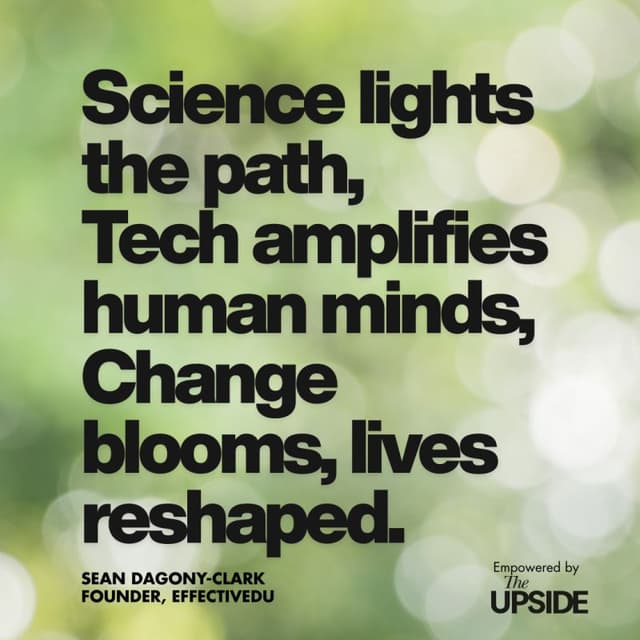
The wonderful people at The Upside used AI to create a haiku about me, based on my professional bio. While I’m grateful as always for their support, I almost didn’t post it. But it’s just too good an opportunity to pass up! Feels like it hit some of the right marks — science, tech, change! …
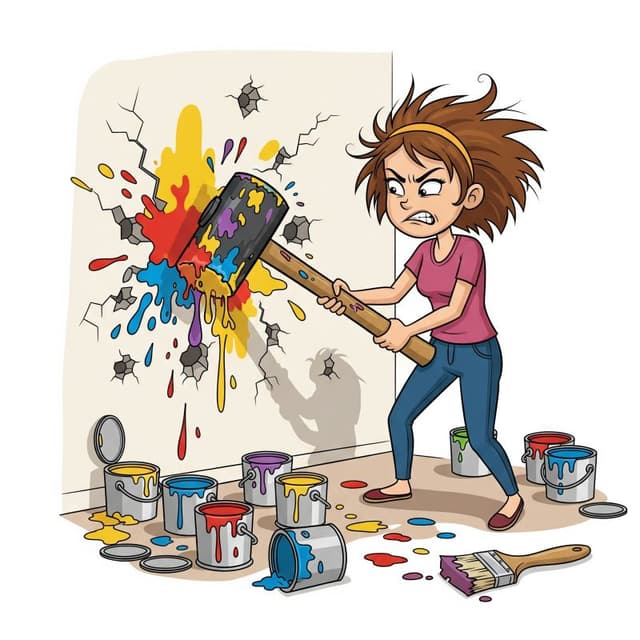
You don’t paint a wall with a hammer. With AI, as with everything, you find the right tool for the job. My last post showed why ChatGPT and Gemini were the “hammer” for factual analysis. For this project, the “paintbrush” was NotebookLM. Which was no surprise. There’s a huge difference in how these AIs work.🌐 …
Lesson learned: for factual analysis, consumer-grade AIs like ChatGPT and Gemini can be dangerously unreliable. The project: create an AI study partner for the California psychology licensing exam, feeding in over 1,000 pages of dense legal text plus strict rules to ONLY use the sources provided. And it had to be an off-the-shelf AI with …
AI and learning? Everything has changed. And nothing has. The “everything” is obvious: AI tutors, automated assessments, rampant cheating, legit fear of replacement, and the potential of truly individualized learning. The learning landscape is facing enormous disruption. And yet: A few of the constants:👉 Intentionality: Great learning requires meaningful goals and meaningful assessment built from …
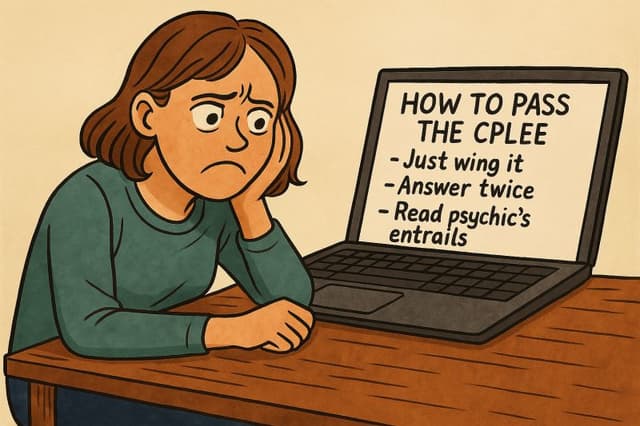
Critical thinking with AI?Don’t trust. VERIFY! (👆 there’s your AI mantra for the week) I just came up for air after a lengthy project helping someone study for the California Psychology Laws and Ethics Exam (CPLEE), the licensing exam for psychologists who practice in CA. They’d already tried one of the 3rd party exam prep …
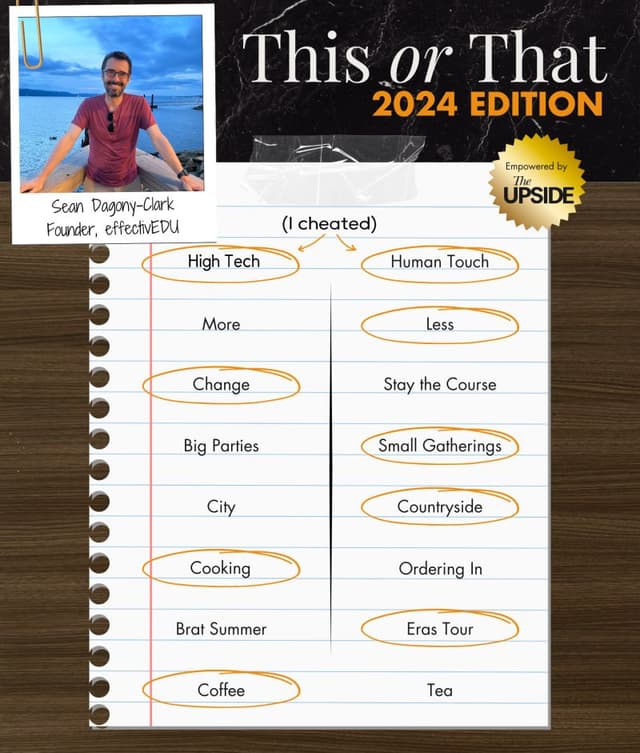
Sometimes it’s not this or that. Sometimes it’s both.That’s why I’m pivoting my consulting business in the new year. Thanks to The Upside‘s This or That campaign, I got to thinking about some things I’ve learned (or re-learned) about myself this year:🤏 Less is more (except for the clutter on my desk, that’s just more)🤯 …
I went down a rabbit hole of Gen AI and engineered an AI ghostwriter! A human ghostwriter would try to understand and mimic the voice and style of your writing. Your AI ghostwriter Invisible Ink does the same thing!
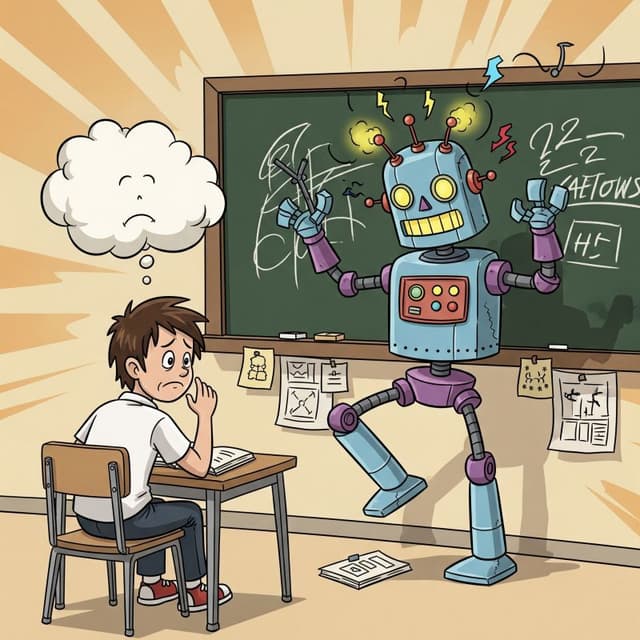
(I haven’t lost my mind. Allow me to explain.) Math and math-adjacent fields faced a crisis in the 1970s when digital calculators arrived in students’ hands. These were just basic versions, nothing close to scientific or graphing calculators (just go look up the TI-30!), but they were a quantum leap ahead of the slide rule …
✅ Consider politics: deepfakes are already influencing elections. 👩🎓 Consider education: I recently showed a team of teachers how to generate an entire term paper with Gen AI. (Chicago-style citations and all.) 🎭 Consider industries: OpenAI‘s Sora videos, or Midjourney‘s images, or Anthropic‘s Claude AI writing. Then consider Gen AI has been in the public …
That question was at the heart of the professional development session I ran last week for Horace Mann School‘s History Department. I think the teachers left a little less certain about the answer. (Which was one of my goals. Sorrynotsorry.) I showed them how, with just a few minutes of prompting, Generative AI can create …
Yet 60% of teachers still don’t use it. 🤔Spoiler alert: it’s not their fault. Plenty of past EdTechs have claimed they will revolutionize teaching. Most have failed. Remember filmstrips? Interactive whiteboards? The list goes on and on. The difference with AI, as I’ve argued in past posts, is that no other EdTech can replace thinking. …
But… what if you can’t use AI? 😰 My last few posts used AI assists to illuminate what your learners need to learn next.🦾 First we predicted learning gaps with AI to help build your lesson plans.🦾 Then we built individualized assessment using AI to show exactly what each person needs to learn next. Now …
You’ll learn best if the learning is targeted to your personal needs. 😎 (This isn’t about learning styles. Don’t get me started on learning styles.) What if, every time you learned something, it started at exactly the right place for you based on what you already know? There would be no need for background research …
But… how do you know what’s needed? 🧐 I had high school classes where the teacher said “We were on page 87 yesterday, so today we’ll start at the top of page 88”? I’m sure you’ve had the same. Wait. Why is that wrong? Page 88 is the next page, after all! Here’s the problem: …
Teaching is way more than telling. A great teacher unearths their learners’ misconceptions and misunderstandings, and then targets them to fill gaps and build higher quality knowledge. In other words, you don’t just teach what’s next; you teach what’s NEEDED. One of the more challenging elements of teaching is figuring out what our learners need …
No, ChatGPT isn’t dead yet. But this weekend was chaos weekend at OpenAI, the company that created it. (CEO Altman was out! Then maybe he wasn’t! Then he was hired by Microsoft! And then most of OpenAI’s employees were ready to follow him! Wheeee!!!!!) OpenAI may survive, but the sharks are circling. Now’s a perfect …
I’ve been thinking a lot about the below since I posted it. The risk of trusting AI to get pseudo-human interaction right, the difficulty of knowing just how to balance AI’s advantages with the necessity of a human touch, the cognitive reward of human interaction that’s missing from AI. I released a podcast episode with …
She’d just told me she’d started learning about the human nervous system for a class by Googling articles. I asked her a few questions about the topic, and then thought: Aha! Perfect opportunity to employ AI for learning! I asked whether she’d like to build a prompt in ChatGPT that would help her learn what …
How do we nurture excellence in a world where “artificial intelligence can do it for me”? I homeschooled my elder daughter last year and this year. This year she’s attending Sora Schools (and loving it, I might add); last year I built her curriculum. This story is about last year, when she was in 7th grade. I …
If you’ve been following this series, you know the answer is yes. At least in some ways. Here’s where you find out what to do about it! Part 1 of this series, on Human Intelligence vs. Artificial Intelligence, is here. Part 2, on Artificial Intelligence, Machine Learning and Generative AI, is here.Part 3, Is Artificial …
Most likely: yes. And you’ll find out why in this very post! Wait, don’t leave! This is a four-part series on how we can use artificial intelligence to our advantage! Part 1 of this series, on Human Intelligence vs. Artificial Intelligence, is here.Part 2, on Artificial Intelligence, Machine Learning and Generative AI, is here.This is …
Sorry, but the answer might be yes. Wait, don’t leave! This is a four-part series on how we can use artificial intelligence to our advantage! Part 1 of this series, on Human Intelligence vs. Artificial Intelligence, is here.This is part 2, on Artificial Intelligence, Machine Learning and Generative AI.Part 3, Is Artificial Intelligence Smarter Than …
Sorry, but the answer might be yes. Wait, don’t leave! This is a four-part series on how we can use artificial intelligence to our advantage! This is Part 1, on Human Intelligence vs. Artificial Intelligence.Part 2, on Artificial Intelligence, Machine Learning and Generative AI, is here.Part 3, Is Artificial Intelligence Smarter Than I Am? is …
Fine, it’s a provocative title. Of course we do. But here’s a real question for those in a school or professional learning environment: how are you preparing for a world in which AI writing is indistinguishable from human writing, what are you doing regarding AI/ML and evaluating student learning, and how are you considering incorporating …