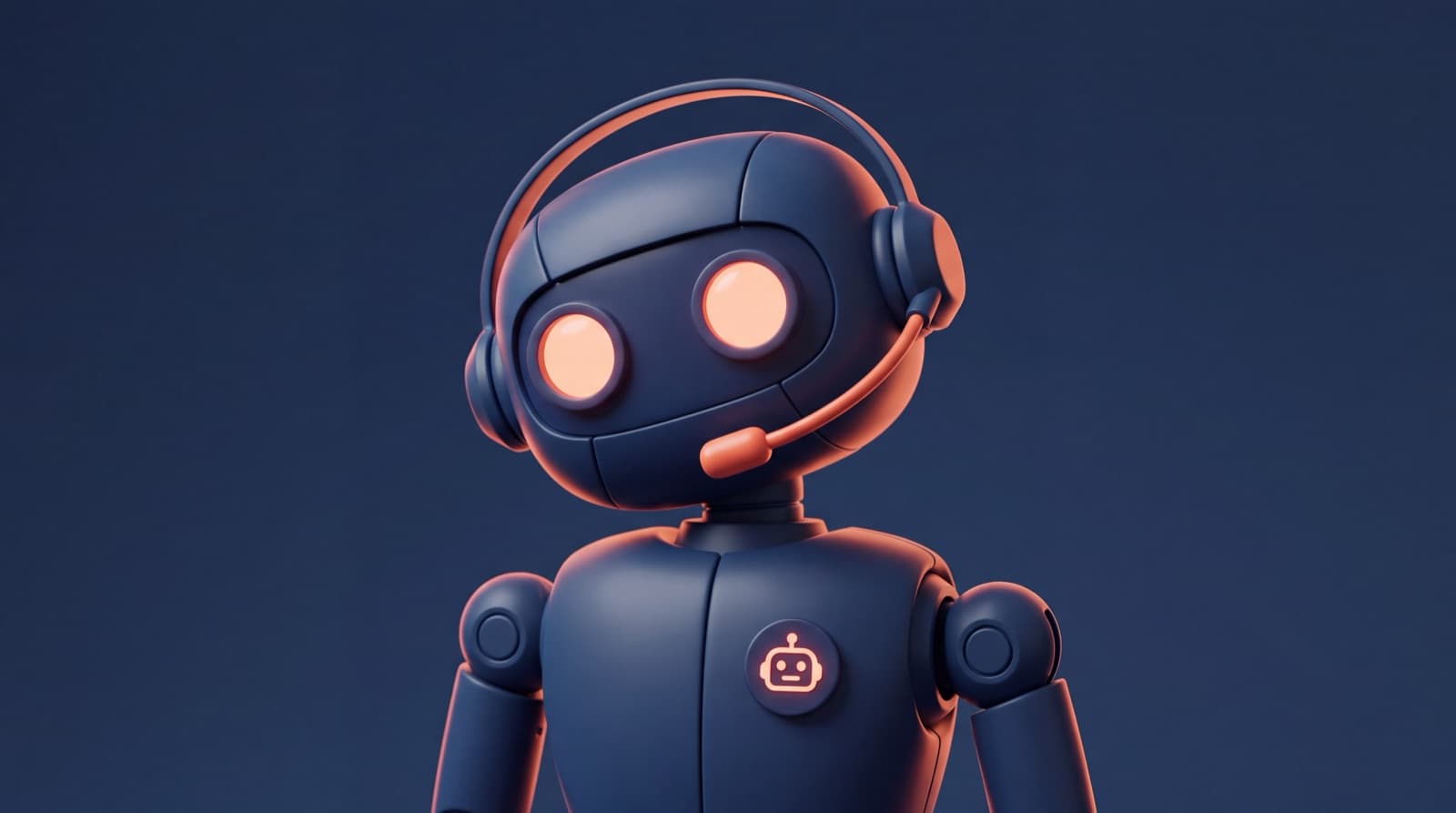
My cousin, whom we'll call "Ann," recently asked my opinion about AI receptionists. It seems a small, local business she loves, where she had once worked, wanted to roll out an AI receptionist. Reasonable move — catching every call makes a big difference — but they wanted to name the AI after her. As in, "Hi, this is Ann."
She wasn't a fan. Neither was I.
Putting aside the weirdness of an AI using her name, the bigger issue was the thinly-veiled impersonation of a human. People notice pretty quickly that something in an AI voice is off. Maybe the answer is too smooth, or too friendly, or takes a moment too long. They start to feel doubt. Then they start to feel uncomfortable and annoyed. Maybe they start saying "Speak with an agent!" louder and louder. (Is that just me?) Whatever the case, their interaction with the company turns into a negative one.
There's a name for that doubt we feel when the AI voice isn't quite right: the uncanny valley. It's the discomfort when something seems almost human but not quite, first described by robotics professor Masahiro Mori back in 1970 (Mori, 1970/2012). It's why we're fine watching cartoons of humans that are obviously fake, but feel uneasy watching animation of humans that is meant to look lifelike yet... isn't. The closer the fake gets to real (without looking fully real), the more unsettling the little gap becomes. Same thing applies with voice.
When a caller gets on a call with an AI receptionist and hears "Hi, I'm Ann, how can I help you?", their brain picks up... something... that triggers doubt. They spend the next moments trying to determine whether the receptionist is human. And when they figure it out, they feel tricked, and they lose trust in the place they're calling. Because nobody likes to feel tricked.
The fix isn't a better voice. As with all AI use, it's transparency.
Imagine this call instead: "Hi, I'm an AI assistant. I can probably help you, but if you'd rather, I'll connect you to a person." Now the caller knows exactly what they're dealing with. They can ask a question and get an AI answer, or they can take the clearly marked path to a human if they want it.
WHEN IMPLEMENTING AI, BE TRANSPARENT
An AI receptionist can genuinely help a small business. Missed calls really are lost customers, and a tool that fields all the calls is a good tool. But pretending your AI receptionist is human just works against you.
That's the both/and this week: high-tech efficiency and high-human honesty, in the same experience. Win/win.
So if you're thinking about implementing an AI receptionist, here's your homework: make it honest about what it is.
Is there a place in your business where being transparent about your tech would build trust? Hit reply and tell me. I read every message.